
Exhibitions
Preparing Work for a Ceramics Exhibition
Frances Smith · · 5 min read
The making is the part people imagine. Getting a ceramics exhibition onto the shelves is mostly admin, packing and decisions about what to leave at home. None of it is difficult and all of it takes longer than you think.
Choosing what goes in
Start by laying everything out together, ideally on a table at roughly the height the work will be shown at. Pieces that look strong on their own can disappear next to something louder. You are choosing a group, not a set of individuals.
Cut hard. A ceramics exhibition of twelve strong pieces reads better than one of twenty where eight are filler, and the eight weak ones drag the rest down. If you are unsure about a piece, it goes home.
Let the group have a reason
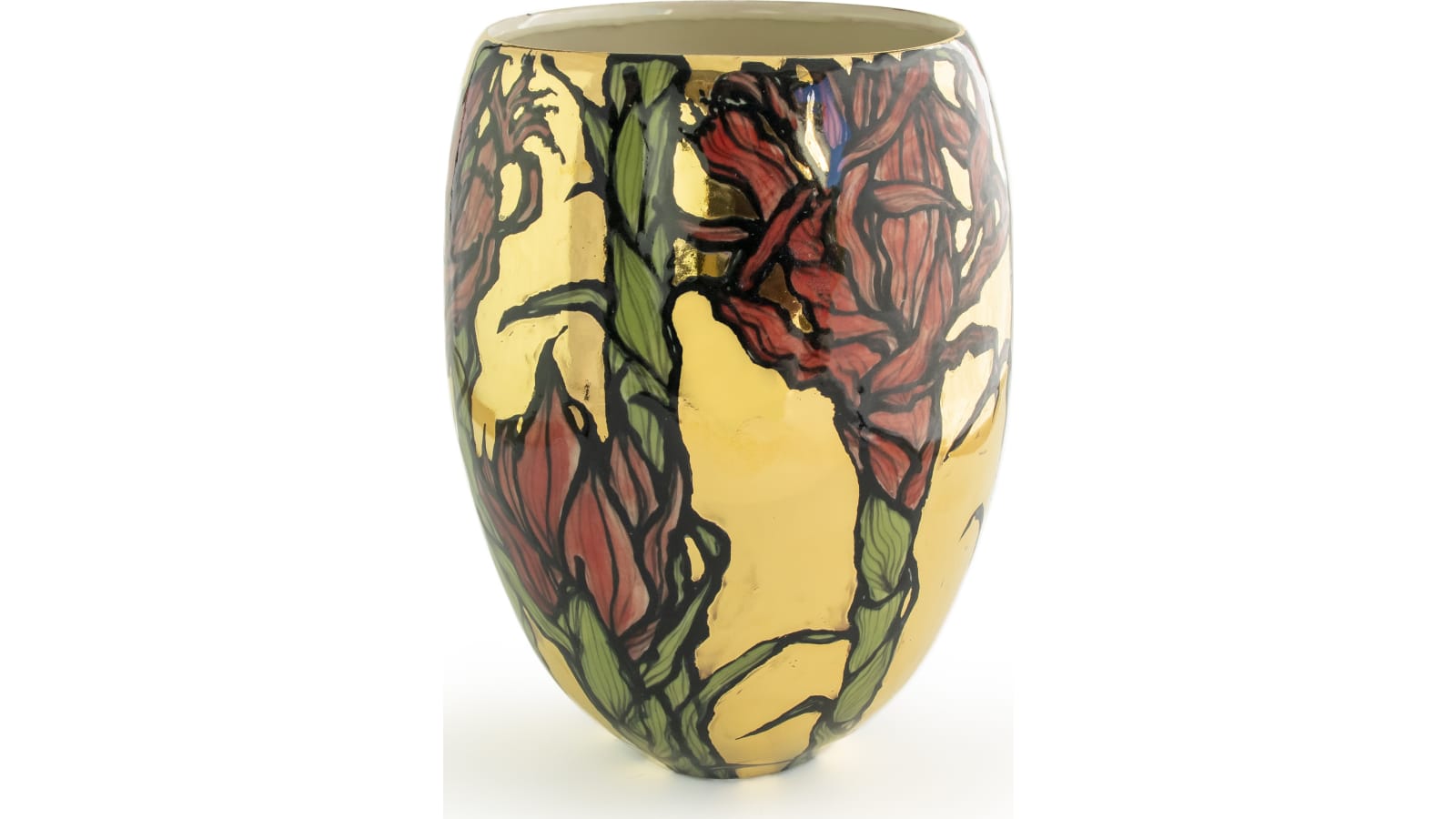
Work that shares a subject, a palette or a form gives a viewer somewhere to stand. The Gymea Lily vessel above belongs to a run of pieces built on Australian natives, and shown together they explain each other. Shown among unrelated work, each one is just a nice pot.
Pricing
Price the work before you deliver it, not on the day. Prices set in a hurry at the gallery door are almost always too low, and you cannot raise them once the labels are printed. Pricing for a ceramics exhibition is also the moment to check what you charge elsewhere.
Remember commission. A gallery taking forty percent is normal in Australia and the price on the wall has to carry that. Work out what you need to receive, then divide by the remaining share. If you sell the same work directly elsewhere, keep the prices consistent, because collectors do notice and it damages trust quickly.
The label
Every piece needs title, year, materials, dimensions and price. Materials should be specific. Stoneware with gold lustre tells a buyer more than ceramic does. Dimensions go height first. Get these to the gallery as a spreadsheet well before the deadline, because someone has to typeset them.
Packing
Ceramics break in transit more than any other medium, and almost always for the same two reasons. Pieces touch each other, or a box is packed loosely enough to let things move.
- Wrap each piece separately. Bubble wrap with the bubbles facing in.
- Fill every void. If you can shake the box and hear movement, it is not finished.
- Pack heavy pieces at the bottom and never stack directly on a rim.
- Number the boxes and put a list of what is in each one on the outside.
Take photographs of each piece before it goes in the box. If something arrives damaged, the photograph is what settles the question of when it happened.
How a ceramics exhibition is laid out
Ask what you are being given. A ceramics exhibition shown on white plinths at varying heights looks very different to one on a single long shelf, and it changes which pieces work. If you have a choice, vary the height. Rows of objects at one level stop being individual objects and become a pattern.
Bring museum wax. Galleries have public liability concerns and a tall vessel near a walkway will need securing. Doing it yourself is faster than waiting for someone else to find some.
Photograph everything first
Photograph each piece properly before it leaves the studio, not in the gallery under their lighting. You need those images for the catalogue, for press, for social media and for your own records, and the gallery will ask for them at short notice.
Plain background, daylight from the side rather than the front, and one shot per piece with the whole object in frame. Add a detail shot of any surface work. Shoot slightly above eye level for vessels, because straight on flattens the shoulder of a pot and makes it look narrower than it is.
The artist statement
Most galleries want a short statement and a short biography. Keep the statement to one paragraph about this specific group of work, not your life philosophy. Say what the pieces are made of, what they are about and why you made them now. Three or four sentences is plenty, and it will be read by more people than anything else you write.
The paperwork
You will usually need a consignment agreement listing every piece with its price, an invoice or ABN details for payment, and in some cases public liability insurance. Read what happens to unsold work and who pays return freight, because that clause is where disagreements start.
Keep your own record of what went where. This is exactly the sort of thing ArtFlow keeps track of, and it matters most when you have work in three places at once and someone asks whether a particular vessel is still available.
For current calls and opportunities around the country, the Australian Ceramics Association lists exhibitions and awards worth putting in the diary.
On the day
Arrive early, bring a cloth for fingerprints, and bring spare labels. Something is always missing and it is usually a label. Then step back and let people look. The work has to hold its own now, and standing next to it explaining is the fastest way to stop someone buying.