
How to Sell Pottery in Australia: Markets, Stockists and Online
The shelves are full, and the spare room's starting to look like a shop. Here's how to sell pottery in Australia, from market stalls and stockists to cafes and online, plus pricing, ABNs, and what buyers need to know.
Aima Eman · · 9 min read
If you want to sell pottery, there usually comes a moment when you realise you have to. The kiln's been busy all winter. Every shelf in the spare room is full of mugs; there are bowls stacked on the dining table, and your partner has started asking, politely, whether the laundry is a studio now. Your mum's friends bought the first ten. Now what?
The good news is there's no single right way to do it. Most potters end up selling through a mix of places, each with its own trade-offs on money, time and effort. Once you know how they work, it gets a lot easier to choose the ones that suit you, your work and how much of your weekend you're willing to give up.
Key takeaways
Markets let you keep the full retail price, but they cost you fees, gear, and a lot of Saturdays.
On consignment, shops commonly keep around 40% of the retail price. Wholesale usually pays about half of retail, upfront.
Price your work so it still makes sense at wholesale, not just at your own stall.
A hobby can't get an ABN. If you're running a business, an ABN is free and saves other businesses withholding 47% from your payments.
Tell buyers what they're getting: the clay, whether it's food-safe, and whether it can go in the dishwasher or microwave.
Where to sell pottery: the main options
Think of it as a menu. Pick a couple to start with and add more as you go.
Markets and open studios
This is where a lot of potters start, and for good reason. You keep the full retail price, you meet the people who buy your work, and you find out very quickly which mugs everyone picks up and which bowls nobody looks at twice.
It's also hard yakka. There are stall fees, a gazebo, tables, a card reader, packing materials, and a car loaded to the roof before sunrise. One windy morning at a seaside market will teach you to weigh down your gazebo legs, and to stop putting your tallest vases on the front of the table. Still, for feedback and cash flow, markets are hard to beat.
Shops and stockists
Getting your work into a homewares store, gallery shop or design store opens you up to customers you'd never meet at a market. There are two main ways it works.
On consignment, the shop displays and sells your work, and you're paid when something sells. According to The Ceramic School, the most common split for shops is 60/40, with the shop keeping 40%, while galleries tend to sit closer to 50/50. Always put it in writing.
Wholesale is different. The shop buys your work outright, usually at about half the retail price, and pays upfront. You get paid sooner and know what's coming in, but you keep less per piece, and you'll need to deliver the quantity you promised, on time.
Cafes, restaurants and custom orders
Plenty of potters supply cafes and restaurants with plates, cups and serving bowls. It can be steady work, and there's something pretty special about seeing your bowls on the table at a local café.
It comes with its own demands, though. Commercial kitchens are hard on ceramics, so ask what they'll be putting the pieces through and be honest about what your work can handle. They'll want consistent glazes, matching sizes, and replacements when things break. Agree on lead times, quantities and prices before you start throwing.
Selling online
Your own website, a marketplace, or a bit of both. Online opens you up to buyers across the country, but it also means good photos, careful packing and shipping fragile work through the post. We've covered the fees, platforms, and shipping limits in detail in our guide on how to sell art online, and almost all of it applies to pottery.
Pricing pottery so it's worth making
Here's the trap a lot of people fall into when they first sell pottery. They price a mug at what feels fair at a market, say A$40, then a shop asks for wholesale and suddenly they're making it for A$20. Once you take out clay, glaze, kiln power, and your time, that might not leave much at all.
So work out your prices with every channel in mind. If you'd be happy to receive A$25 for a mug at wholesale, your retail price needs to be around A$50, and that's what it should be everywhere, including at your own stall. Keeping one retail price across markets, shops and online also stops you undercutting your stockists, which they really don't love. Our guide on how to price your artwork walks through the maths step by step.
And remember kiln losses. Pieces crack, glazes run, things go wonky. The Ceramic School's advice is to make a few extras for any order, which is good advice for anyone who's ever opened a kiln with their fingers crossed.
The paperwork bit: hobby or business?
Nobody gets into pottery for the admin, but once you sell pottery regularly, this bit matters.
The business.gov.au guide explains that a hobby is something you do in your spare time for recreation or pleasure, while a business is about intending to make a profit, repeating the activity and running it in an organised way. If it's a hobby, you're not eligible for an ABN. If it's a business, an ABN isn't compulsory, but it's free, and without one, businesses you sell to have to withhold 47% of what they pay you. That's a big chunk of a wholesale order.
One more thing from the same guide: if you sell goods, the Australian Consumer Law applies whether it's a hobby or a business. And if your sales grow past A$75,000 a year, you'll need to register for GST. This is general information, not tax advice, so talk to an accountant when it starts to get serious.
Tell buyers what they're getting.
Handmade pottery comes with questions, and answering them up front makes it much easier to sell pottery without awkward returns later.
Say what the clay is. Say whether a piece is food safe, dishwasher safe, and microwave safe, and be honest if something is decorative only. If anything has gold or metallic lustre, make it clear it can't go in the microwave. Buyers often don't know the difference between earthenware, stoneware and porcelain, so our guide to stoneware vs porcelain is a handy link to share.
Tip: Put a small care card in with every piece you sell, whether it's at a market, through a shop or online. Clay type, food and dishwasher safety, and one or two care tips. It takes seconds, saves you answering the same questions over and over, and makes your work feel more considered.
What stockists and cafes look for
If you want to sell pottery to shops and cafes regularly, consistency matters as much as beauty. A shop wants to reorder the speckled mug that sold out last month and get something that looks like it. A café wants twenty bowls that stack.
That means keeping notes on your clay bodies, glaze recipes, and firing schedules, being realistic about how many pieces you can make in a month, and saying no to orders you can't deliver on time. It's less romantic than a one-off sculptural piece, but it's what turns pottery into a steady income for a lot of makers. For a glimpse of how one South Coast potter runs a working studio, have a look inside a Kiama ceramic studio.
Keep track of where every pot is
The more places you sell, the messier it gets. Ten mugs at a shop in town, six bowls on consignment at a gallery, a box of seconds under the bench and a market on Sunday. Which pieces sold? Which ones are still out? Who owes you money?
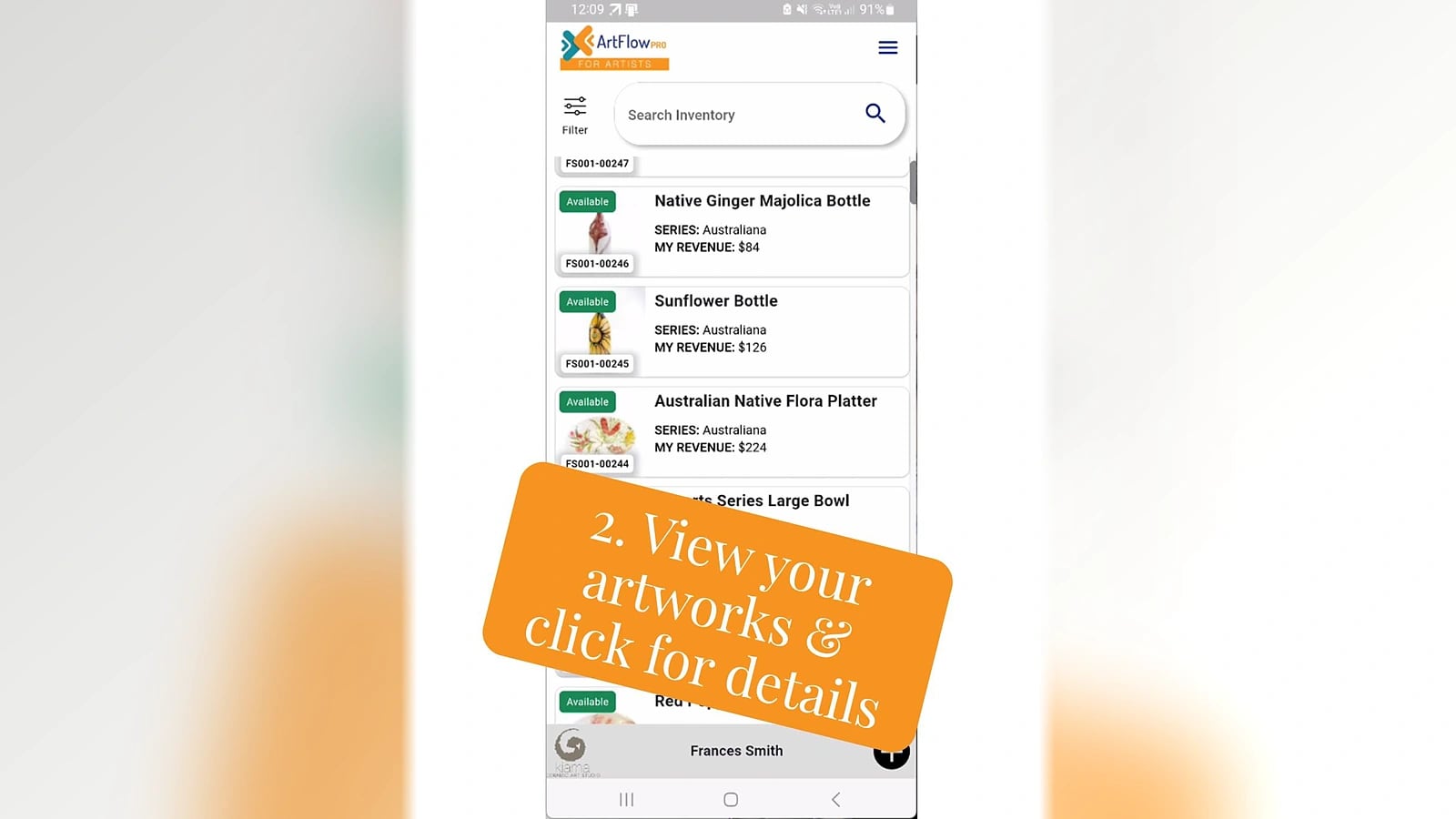
That's exactly the problem the cover of this post shows. In the ArtFlow mobile app, you can scroll through your artworks, see each piece's series and what you'll earn from it, and tap in for the details. Each piece keeps its photos and history, consignment documents can be created from your records, and you can publish work to Shopify, WooCommerce, Squarespace, Wix or Square POS from the same catalogue. The features page has the full rundown.
Questions about how to sell pottery
What's the best way to sell pottery in Australia? Most potters use a mix: markets for cash and feedback, shops or galleries for wider reach, and online for buyers further away. Start with one or two and add more as your output grows.
How much do shops take on consignment? It varies, but The Ceramic School says the most common split for shops is 60/40, with the shop keeping 40%. Galleries tend to sit closer to 50/50. Always agree it in writing.
What's a fair wholesale price for pottery? Wholesale is usually about half the retail price. Make sure that half still covers your materials, firing costs, and time.
Do I need an ABN to sell pottery? Not if it's a hobby, and you can't get one for a hobby anyway. If you're running a business, an ABN is free and avoids buyers withholding 47% from payments to you.
Should I tell buyers if my pottery is food safe? Yes. Say what the clay is and whether each piece is food, dishwasher, and microwave safe. It builds trust and cuts down on returns.
The short version
To sell pottery well, pick a mix of channels that suits you, price so the numbers work at wholesale as well as retail, and keep one retail price everywhere. Sort out whether you're a hobby or a business, tell buyers exactly what they're getting, and keep good track of where every piece is. If you'd like one place to manage your stock across markets, shops and online, start a free ArtFlow account and catalogue your work before the next kiln load comes out.