
How to Build a Body of Work That Actually Hangs Together
Lots of good pieces don't always add up to a show. Here's how to build a body of work that feels like one voice: picking a thread, editing hard, naming your series, and getting it ready for galleries, markets, and open calls.
Aima Eman · · 9 min read
A body of work is one of those phrases that gets thrown around at every opening night, usually by someone holding a plastic cup of Riesling. "Lovely body of work." "Really cohesive." You nod along. Then you get home, look at the studio, and see a seascape, two abstracts, a portrait of your neighbour's kelpie, some lino prints from that weekend workshop and a box of mugs. All decent. None of them talking to each other.
That's normal. Most artists make a bit of everything for years, and that wandering is how you find out what you love. But at some point a gallery, a prize or an open call asks for "a cohesive series", and suddenly the pile of good pieces doesn't quite add up to anything. This guide is about closing that gap.
Key takeaways
A body of work is a group of pieces connected by an idea, a look, a material, or a place, so they read as one voice.
Pick one thread and stick with it long enough to go deep, usually longer than feels comfortable.
Make more than you need, then edit hard. Leaving pieces out is part of the job.
Give the series a name and a few plain sentences that explain it.
Keep each series grouped in your records so you can send it anywhere fast.
What is a body of work, really?
Put simply, it's a set of artworks that belong together. Not identical. Related. Someone walking around the room should be able to tell, without reading a word, that the same person made all of it and was chasing the same question.
The link can come from lots of places. A subject, like the coastline near Kiama, or your grandmother's kitchen. A material, like porcelain, river clay or found timber. A process, like cyanotypes left out in the midday sun. A colour palette. A size and format. Usually it's two or three of these at once.
If you went through school in NSW, you've probably heard the phrase before. HSC Visual Arts students make a body of work in Year 12, and each year ARTEXPRESS puts a selection of outstanding ones on show at the Art Gallery of NSW and regional galleries around the state. Walk through one of those exhibitions, and the idea clicks pretty fast. Each student's wall feels like a single thought, explored from a few different angles. The Art Gallery of NSW's Inside ARTEXPRESS archive goes back to 2005, with some process diaries too, and it's a great rabbit hole if you want to see how a series grows from first sketch to finished wall.
Why galleries care so much
When a gallery director looks at your submission, they're asking a few quiet questions. Does this artist know what they're doing? Could I hang ten of these in one room and have it feel like a show? Will they still be making this kind of work in two years, so collectors can come back for more?
A random mix of good pieces doesn't answer those questions. A focused set does. It shows commitment and a clear eye, and it makes the curator's job much easier. That's why so many open calls ask for a series rather than your greatest hits. If you're putting a submission together right now, our guide on writing an exhibition proposal walks through the rest of the package.
Buyers notice too. Somebody who loves one piece from a series often comes back for a second, then a third. Hard to do that with one-offs that have nothing in common.
Finding your thread
This is the hard bit, and nobody can hand it to you. But there are a few good places to look.
Start with what you already keep coming back to. Spread out everything you've made over the past year or two, on the floor if you have to. Which pieces do you like most? What do they have in common? Often the thread is already there, hiding under all the experiments.
Ask what you can't stop thinking about. A place, a memory, a question, a material that won't leave you alone. The best series tend to come from real curiosity, not from guessing what might sell.
Then narrow it down more than feels natural. "The Australian bush" is too wide. "Saltbush and red dirt around Broken Hill at dusk, in oil, on small panels" gives you something to dig into. A tight brief sounds limiting. In practice, it sets you free, because you stop starting from scratch every Monday.
How many pieces do you need?
There's no magic number. It depends on the size of the work, the space and what it's for. An open call might ask for six to ten images. A solo show in a small regional gallery might need fifteen or twenty pieces, sometimes more if they're small. Ask the gallery, or check the call-out, before you plan.
Whatever the target, make more than you'll show. A lot more if you can. Some pieces just won't land, and that's fine. Making extra gives you room to choose the strongest and leave out the ones that are only okay.
Editing your body of work
Here's where a lot of artists struggle. Leaving work out feels like admitting it failed. It didn't. It helped you get to the good ones.
A few habits make editing easier:
Pin everything up together. Photos on a wall, prints on the floor, whatever works. You'll spot the outliers fast.
Look for the odd one out. If one piece makes you go "hmm, where does that fit?", it probably doesn't.
Watch for repeats. Five pieces that say the same thing in the same way can become two stronger ones.
Get a second pair of eyes. An honest friend, a mentor, another artist. Ask which three they'd cut.
Keep the cut pieces, of course. They might start the next series, sell at a market or end up as gifts. They just don't belong in this one.
Name it and explain it
A series with a name feels more real, to you and everyone else. It doesn't need to be clever. Plain and specific is better. "Bush Tucker Vessels" tells people exactly what they're looking at. So does "Endangered", for a set of works about threatened plants.
Then write a short statement. Three to five sentences: what the work is, why you made it, and what you'd like people to notice. Avoid the jargon. If your mum or your mate at the footy can follow it, you're on the right track. Our guide on how to describe your artwork goes into this properly.
Tip: Write your series statement before the series is finished, then rewrite it at the end. The first version keeps you on track while you're making. The second one describes what you actually made, which is often a little different, and usually more interesting.
A ceramics example
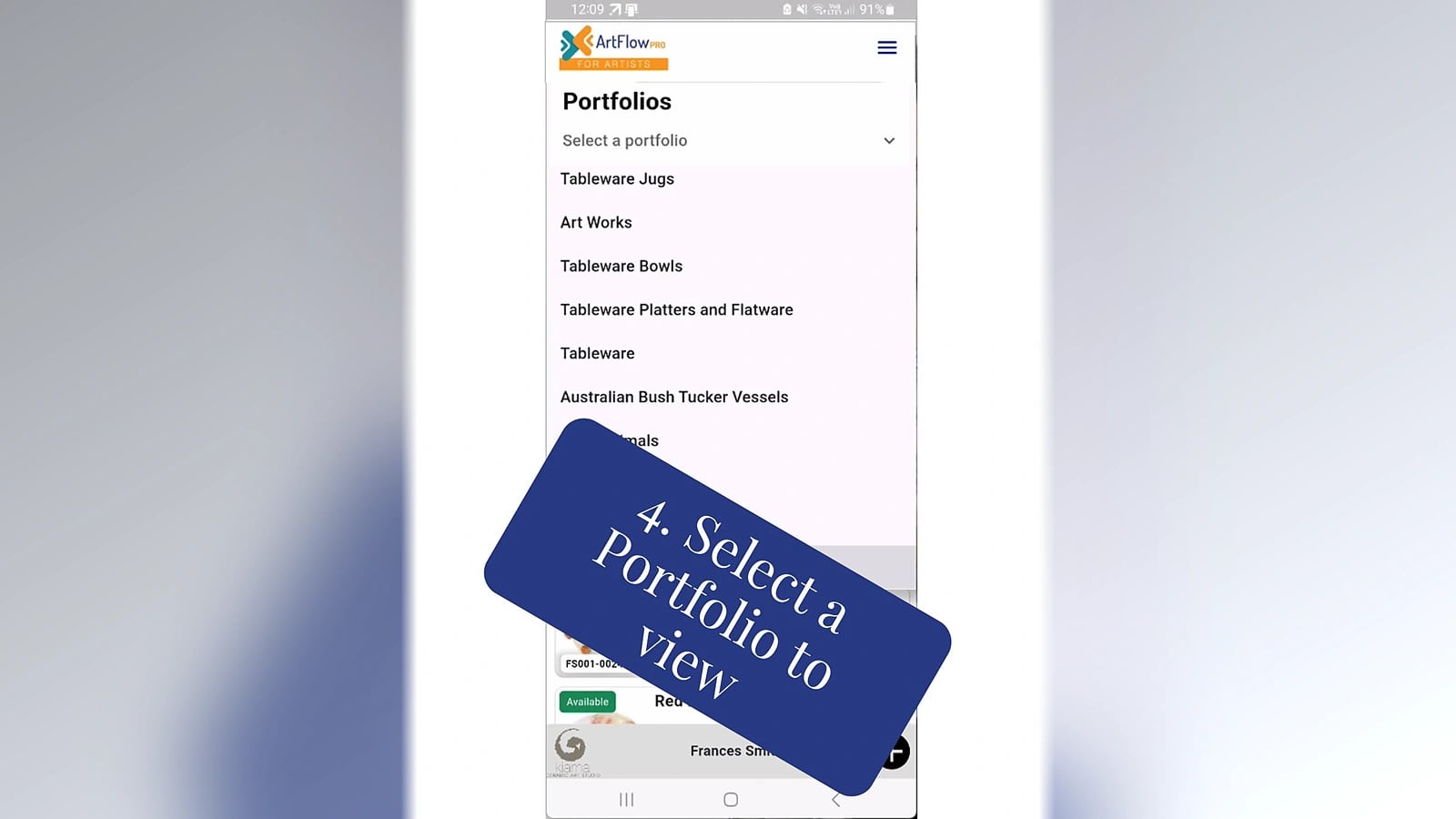
Series aren't just for painters. Potters build them all the time. Our post on Australian flora ceramics from Kiama shows a working studio grouping new pieces into clear series, including Bush Tucker vessels and an Endangered range, each with its own idea, glazes and forms. You can see the same kind of grouping on the cover of this post, where portfolios like Tableware Jugs, Tableware Bowls and Australian Bush Tucker Vessels sit side by side in the ArtFlow app.
The functional pieces and the sculptural ones live in different series. That's the point. A buyer looking for a jug doesn't have to scroll past forty sculptural vessels to find one, and a gallery looking for exhibition pieces sees a focused set straight away.
Showing a body of work
Once you've got a solid series, think about where it'll make the most sense. A gallery show, obviously. But also a themed market stall, an online collection, a prize entry or a studio open day. If you're aiming at three-dimensional work and outdoor shows, our guide to sculpture exhibitions in Australia lists where to apply.
Hang or display the work so the connection is obvious. Similar spacing. A clear start and finish. Pieces that talk to each other placed close together. And present the series together online too, rather than mixed in with everything else you've ever made.
Keep your series organised.
Here's a practical problem nobody warns you about. Once you've got two or three series on the go, plus older work and one-offs, finding the right images and details at short notice gets messy. An open call drops with a week's notice, and you're digging through your phone for the photo of piece number seven.
In ArtFlow, you can group artworks into portfolios, so each series sits together with its photos, sizes, materials, and prices. When a gallery asks to see your latest body of work, you can pull up that one portfolio instead of the whole lot. Our older piece on the full-time artist talks about why this kind of admin matters once art becomes your living. The features page shows how portfolios work.
Questions about building a body of work
What is a body of work in art? A group of artworks connected by a shared idea, subject, material, or process, so they read as one coherent series rather than separate pieces.
How many pieces make a body of work? It depends on the purpose and the space. Open calls often ask for a handful of images, while a solo show may need fifteen or more pieces. Check with the gallery first, and make extra.
Can a body of work include different mediums? Yes, as long as there's a clear thread linking them. Shared subject, colour or idea can hold mixed media together.
How long does it take to build one? Often many months, sometimes a couple of years. It's rarely quick, and that's okay.
Should I stop making other work while I build a series? Not necessarily. Plenty of artists play on the side. Just keep the experiments separate from the series you're showing.
The short version
A strong body of work comes from picking one thread, going deep, making plenty, and editing hard. Name the series, write a few plain sentences about it, and show it together so the connection is obvious. Keep each series grouped in your records so it's ready the moment an opportunity turns up. If you'd like a simple way to organise your series and portfolios, start a free ArtFlow account and group your next set of work today.